Posted on

How Temperature Affects Ammunition Performance

How Temperature Affects Ammunition Performance

Temperature is one of the most overlooked variables in shooting performance, yet it can have a measurable effect on how ammunition behaves from the moment the trigger is pulled. Many reloaders spend hours perfecting powder charges, seating depth, and brass preparation, only to overlook the fact that the environment itself can influence pressure, muzzle velocity, point of impact, and overall consistency. A load that performs flawlessly on a mild spring morning may produce noticeably different results during the heat of summer or the freezing temperatures of late-season hunting. 

For most recreational shooters, these differences may be small enough to go unnoticed. However, for competitive shooters, long-range enthusiasts, and precision reloaders, even modest changes in velocity or pressure can translate into missed targets and inconsistent groups. Understanding how temperature affects ammunition allows reloaders to better interpret changes in performance, make more informed component choices, and develop loads that remain consistent under a wider range of conditions. 

The good news is that modern powders and reloading components have become far more temperature stable than those of previous generations. Even so, no ammunition is completely immune to environmental conditions. Knowing what changes to expect, and how to minimize their impact, can help you build more reliable ammunition and gain greater confidence whether you’re practicing at the range, competing, or hunting in changing weather conditions. 

Why Temperature Matters 

Ammunition relies on a chemical reaction to generate the pressure needed to propel a bullet down the barrel. Because chemical reactions are influenced by temperature, changes in environmental conditions can affect how efficiently powder burns when a cartridge is fired. 

As temperatures rise or fall, pressure levels and muzzle velocity may change as well. While these differences are often minor for recreational shooting, they can become more noticeable at longer distances where precision matters. 

Hot Weather and Ammunition Performance 

Higher temperatures generally increase the energy available during the combustion process. As a result, ammunition exposed to hot conditions may produce slightly higher chamber pressures and increased muzzle velocities. 

For most shooters, these changes are relatively small. However, in extremely hot environments or when ammunition is left in direct sunlight for extended periods, performance differences may become more noticeable. 

Increased velocity can alter bullet trajectory and point of impact, particularly at longer ranges. 

Cold Weather and Ammunition Performance 

Cold temperatures can have the opposite effect. As temperatures drop, powder may burn less efficiently, potentially resulting in reduced pressure and lower muzzle velocity.

This decrease in velocity can affect bullet drop and overall consistency. Shooters who practice during warm weather and then hunt or compete in colder conditions may notice differences in point of impact if ammunition performance changes significantly. 

Modern powders are often engineered to reduce temperature sensitivity, but some variation can still occur under extreme conditions. 

Effects on Accuracy 

Temperature-related velocity changes can influence accuracy, especially when shooting at extended distances. 

Even small changes in muzzle velocity can alter a bullet’s trajectory enough to affect precision. The farther a bullet travels, the more noticeable these differences become. Competitive shooters and long-range enthusiasts often pay close attention to environmental conditions because consistency is essential for repeatable results. 

For shorter-range shooting applications, temperature-related accuracy differences are typically less noticeable. 

Ammunition Storage Considerations 

Proper storage plays an important role in maintaining ammunition performance. 

Ammunition should be stored in a cool, dry environment whenever possible. Excessive heat, rapid temperature fluctuations, and prolonged exposure to moisture can negatively affect ammunition components over time. 

While modern ammunition is highly durable, proper storage helps ensure reliable ignition and consistent performance when it is needed. 

Modern Powders and Temperature Stability 

Advances in powder technology have significantly improved temperature stability. Many modern powders are designed to produce more consistent performance across a broad range of environmental conditions. 

This temperature resistance helps reduce variations in pressure and velocity, making ammunition more predictable regardless of season or climate. For shooters seeking maximum consistency, selecting components known for temperature stability can be an important consideration. 

Understanding Environmental Variables 

Temperature is only one piece of the equation. Every time you pull the trigger, your bullet is influenced by a combination of environmental conditions that work together to affect its flight and overall performance. Humidity, altitude, air density, barometric pressure, and wind all play a role in how a bullet travels from the muzzle to the target. While each factor may seem minor on its own, their combined effect can become significant, particularly at extended distances where precision matters most. 

For example, changes in altitude and air density can alter drag, affecting both bullet drop and retained velocity. Wind can push a bullet off its intended path, while shifts in humidity and barometric pressure can subtly influence ballistic performance. Competitive shooters and long-range hunters often account for these variables before taking a shot because even small environmental changes can affect consistency and point of impact. 

Understanding how these conditions interact allows reloaders and shooters to better interpret what they see on the range. Instead of assuming every change in performance is caused by the ammunition or firearm, experienced shooters recognize that the environment is part of the entire ballistic system. The more you understand these external variables, the better equipped you are to make informed adjustments, build reliable loads, and achieve repeatable accuracy in a wide variety of shooting conditions. 

Find the Reloading Components You Need 

Building accurate, reliable ammunition starts with quality components, but it also depends on having the right reloading equipment and trusted resources behind every step of the process. Whether you are developing a precision rifle load, loading high-volume pistol ammunition, or fine tuning a competition setup, using dependable reloading products helps eliminate variables and produce more consistent results every time you pull the trigger. 

At Titan Reloading, we are committed to helping reloaders of every experience level build ammunition with greater confidence. From premium powders, primers, bullets, and brass to precision reloading dies, presses, and essential accessories, we offer the products serious shooters rely on to achieve repeatable performance at the bench and on the range. 

Consistency is not built by chance. It is built through quality components, careful load development, and equipment you can trust. Whether you are replacing worn tools, experimenting with new loads, or upgrading your entire reloading setup, having the right products can make every loading session more efficient and every round more predictable. 

Visit www.TitanReloading.com today to explore our extensive selection of reloading supplies and equipment. Find the components you need, equip your bench with confidence, and take the next step toward building ammunition that delivers dependable performance, tighter groups, and greater consistency every time you shoot. 
Posted on

How Competitive Shooters Tune Ammunition for Specific Firearms

Competitive shooters operate in a world where small differences matter. At higher levels of shooting, the gap between winning and falling down the leaderboard is often measured in fractions; fractions of an inch in group size, fractions of a second in follow-up shots, or slight variations in recoil and point of impact. Because of that, serious shooters pay attention to details most casual shooters never think about. 

While the firearm itself is critical, experienced competitors understand that ammunition is just as influential, if not more so, once the platform is already capable. Two identical rifles can produce very different results depending on the ammunition being used. That’s why many competitive shooters take control of the one variable they can fully customize: their ammo.  

Instead of relying on factory ammunition designed to function safely across thousands of different firearms, competitive shooters reload their own rounds to match the exact characteristics of a single rifle or pistol. Factory ammo has to be versatile. It has to feed reliably, stay within safe pressure limits, and perform “well enough” across a wide range of chamber dimensions, barrel lengths, and manufacturing tolerances. 

But “well enough” is not the goal in competition. 

Handloading allows shooters to move beyond general performance and into precision tuning. Every element, from powder charge to bullet selection to seating depth, can be adjusted to complement how a specific firearm behaves. This level of control allows shooters to reduce variables that factory ammunition cannot account for. 

The result is not just better numbers on paper, but more predictable performance in real shooting conditions. Tighter groupings, more consistent velocities, smoother recoil impulse, and a repeatable point of impact all come from ammunition that is built specifically for one firearm, not thousands. 

For competitive shooters, this isn’t just about squeezing out extra accuracy. It’s about building confidence. When you know exactly how your ammunition will behave every time you pull the trigger, you remove uncertainty, and that can be just as valuable as any mechanical improvement. 

Why Factory Ammunition Is Not Always Ideal 

Factory ammunition is designed to work safely and reliably in a wide variety of firearms. Manufacturers must produce rounds that function across different barrel lengths, chamber dimensions, and firearm designs. Because of this, factory loads are often built to general specifications rather than optimized for a single firearm. 

For recreational shooting, factory ammunition works perfectly well. Competitive shooters, however, are often trying to eliminate even the smallest variables that could affect accuracy. Reloading allows them to experiment with unique combinations of components until they find the load that performs best in their firearm. 

Adjusting Powder Charges for Consistency 

One of the most important aspects of tuning ammunition is adjusting the powder charge. Powder determines the pressure and velocity of a round, which directly affects how the bullet behaves once it leaves the barrel. 

Competitive shooters often work through small increments of powder charges to find what produces the most consistent velocities and the tightest shot groups. Even a slight variation in powder weight can change how a round performs. The goal is to find a charge that burns consistently and produces reliable results shot after shot. 

Many shooters test several powder charge levels at the range while recording their results. Over time, this testing reveals which combination produces the most accurate performance. 

Matching Bullet Type to the Firearm 

Bullet selection is another critical part of tuning ammunition. Different bullet weights and shapes interact with the barrel differently. Some firearms perform better with heavier bullets, while others may produce tighter groupings with lighter ones. 

Competitive shooters may experiment with several bullet types before settling on the one that performs best in their firearm. The bullet’s design, weight, and ballistic characteristics can all influence how it travels down the barrel and how stable it remains in flight. 

When a shooter finds the right bullet for their firearm, accuracy often improves significantly. 

Adjusting Bullet Seating Depth 

Another factor that affects performance is how deeply the bullet is seated in the cartridge case. The seating depth determines how close the bullet sits to the rifling inside the barrel. Small adjustments in this distance can influence pressure, velocity, and overall accuracy. 

Competitive shooters often experiment with different seating depths to determine which configuration produces the best results. Because each firearm has slightly different chamber dimensions, the optimal seating depth may vary from one firearm to another. 

This level of fine tuning allows shooters to match their ammunition precisely to the firearm they are using. 

Maintaining Consistency Across Every Round 

Once a shooter identifies the ideal combination of powder charge, bullet type, and seating depth, consistency becomes the priority. Every round must be assembled with the same care and precision. 

Case preparation, primer selection, and powder measurement all play a role in producing uniform ammunition. Even small variations in these factors can introduce inconsistencies that affect accuracy during competition. 

By carefully controlling each step of the reloading process, competitive shooters can produce ammunition that performs reliably under demanding conditions. 

Precision Reloading Starts with Quality Equipment 

At a certain level, better results don’t come from guessing, they come from control. And control starts with the equipment you trust at your bench. 

Tuning ammunition is not just about knowledge or technique. It requires tools that deliver repeatable results every time you use them. Powder charges need to be measured with absolute consistency. Cases need to be prepped uniformly. Bullets need to be seated with precision and alignment you can rely on round after round. When your equipment introduces variation, it limits how far your load development can actually go. 

Serious shooters understand that consistency is built, not hoped for. That’s why they invest in reloading equipment that removes variables instead of adding them. 

Titan Reloading provides the tools and components that support that level of control. From precision dies and presses to reliable components used by experienced reloaders, we focus on products that help shooters produce ammunition that performs the same way every time, not just on the first few rounds, but across entire batches. 

The difference shows up where it matters most: 

  • More consistent velocities  
  • Tighter, more predictable groupings  
  • Fewer unexplained flyers  
  • Greater confidence behind every shot  

If you’re ready to move beyond “good enough” and start building ammunition that truly matches your firearm and shooting style, now is the time to upgrade your setup. 

Explore Titan Reloading’s full lineup today and take control of your reloading process so every round you load performs exactly the way you expect. 

Posted on

How Ammunition Works

Ammunition

There are plenty of guns and ammunition enthusiasts who know a few things about their weapon. A precious few know truly how ammunition operates within the context of the weapon. Especially if you’re considering entering the world of hand reloading or are considering purchasing reloading supplies, you should know how your ammunition operates. We’ve put together this quick and handy guide to show you just how ammunition fires and how that relates to your future (or present) in reloading!

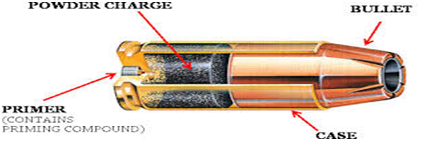
Ammunition is composed of three parts that are all integral to the firing process—the primer, the propellant and the bullet itself.

At the back, the primer (filled with the priming compound) is the spark that ignites the whole show. The primer detonates the chemical explosive known as the propellant (or the powder charge). This is the power that propels the bullet from the weapon to the target. The head of the actual bullet is a cylinder made of metal that tapers to a point to reduce air resistance, allowing the bullet to go faster and go further and also penetrate the target.

When you pull the trigger of a gun, the spring hammers a metal firing pin into the rear of the bullet, igniting the small explosive charge in the primer, which ignites the propellant, which propels the bullet. The gas from the propellant shoots from the back of the bullet, increasing the pressure behind it, and forcing it down the barrel of the gun at tremendously fast speeds (1000 feet-per-second being typical for a handgun).

As the gas from the explosion shoots the bullet forward with force, the whole gun kicks backward with an equal force in the opposite direction. As the bullet fires from the barrel, the pressure of the explosion is suddenly released, causing the well-known BANG! Think of it like opening a bottle of champagne, but with much more pressure and much faster.

If you find this brief description of the chemical and physical reactions taking place inside a cartridge as fascinating as we do, then perhaps you should consider reloading! You’ll never regret knowing how to assemble your own ammunition and it all begins with quality reloading supplies!

For further information or inquiries please contact Titan Reloading at 262-397-8819 or visit www.TitanReloading.com.